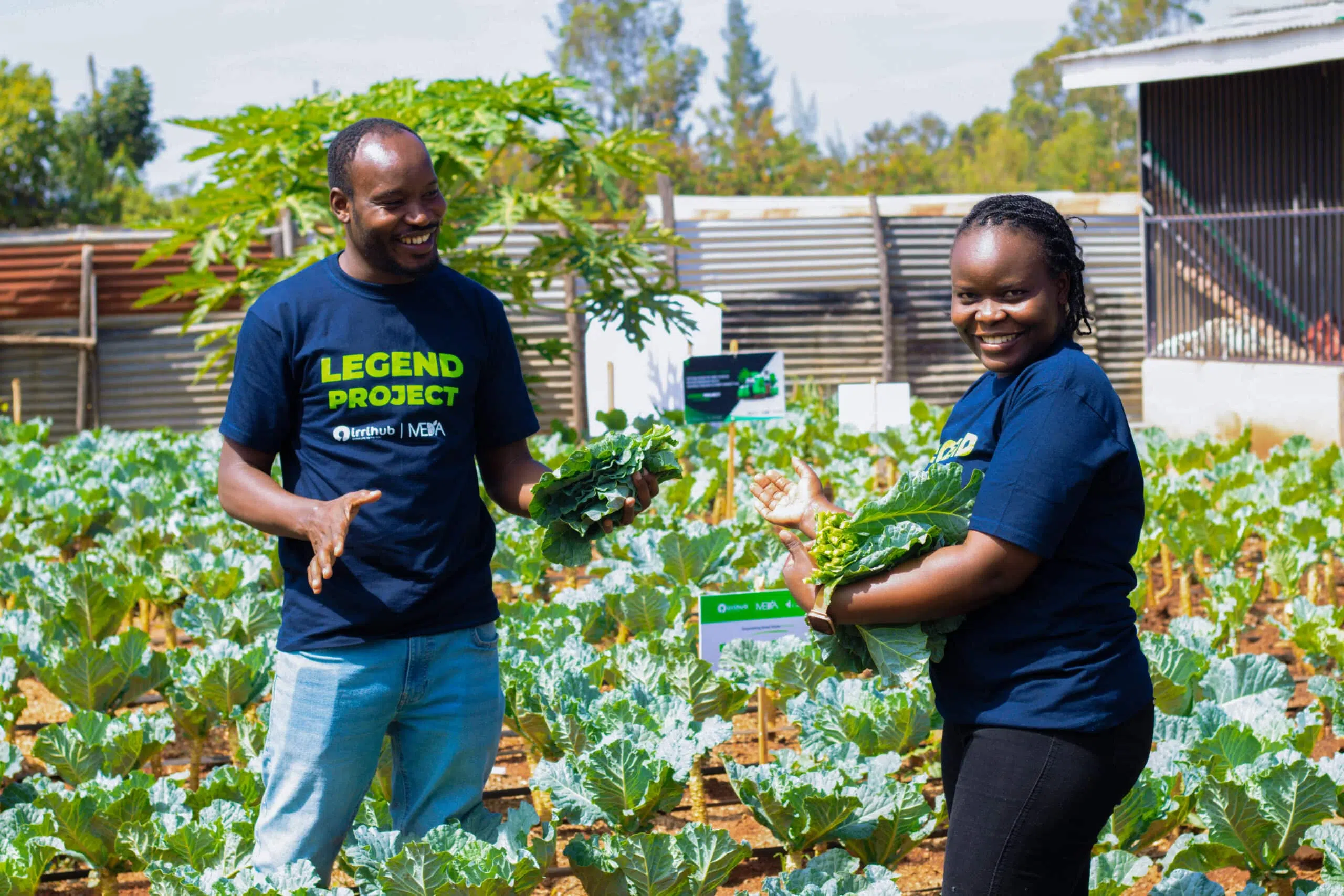
Photo Credit: Credit: Meda.org|In Kisumu, Ruth Atieno and her husband farm kale to support local food security and grow their livelihoods.
Economies & Decent Work · Feb 02, 2026
The Backyard Garden Now Growing Rental Income: Ruth’s Path to Financial Independence
In the populous heart of Kisumu, Kenya, Ruth Atieno has created a small garden sanctuary in her backyard. Her small plot is covered in leafy kale – a...
In the populous heart of Kisumu, Kenya, Ruth Atieno has created a small garden sanctuary in her backyard. Her small plot is covered in leafy kale – a green oasis that feeds the surrounding community.
Raised in a farming household, agriculture has always been a cornerstone of Ruth’s life. Farming funded her education and paved the way for her to become a teacher. But after several years of teaching in private schools, low and inconsistent pay forced Ruth to reassess the future of her chosen career path.
Driven by a strong passion for agriculture, she made a bold decision. She stepped away from teaching and embraced farming as her full-time pursuit to create a thriving agribusiness in Kenya.
From a kitchen garden to a commercial farm
Ruth’s farming journey began modestly, with a small kitchen garden. When her sister, who ran a nearby grocery shop, started selling Ruth’s surplus kale, a business opportunity was born. Customer demand rose quickly, revealing an unexpected, yet clear, market gap.
At the same time, Ruth and her husband owned a parcel of land that was lying idle. Inspired by the growing demand for vegetables, they converted the space into a full-scale vegetable farm. The idea was promising but presented a significant hurdle: the lack of a reliable water source.
In Kisumu, utility water supplies are erratic. Even during the rainy season, there can be long dry spells without access to water. In response, Ruth and her husband dug a well. Yet, due to their work commitments, managing daily irrigation became a challenge.
This challenge led them to Irri-Hub and MEDA – which partnered through the Leveraging Equality for Gender-Inclusive Economic Development (LEGEND) project to offer drip irrigation kits and tanks to smallholder farmers to make them more affordable. Recognizing the potential, and taking advantage of available discounts and incentives, Ruth and her husband invested in a kit in September 2024, began planting in October, and by mid-November, they were harvesting.
Thriving through drought
2024 brought widespread drought and extreme heat across the country, but Ruth’s farm was resilient to these challenges. With her new irrigation system in place, she was able to maintain steady vegetable production at a time when most farms had been forced to pause.
“Early in the year, the country experienced drought and extreme heat, but we were not affected. We continued farming.”
This consistency allowed her to meet growing demand, especially when vegetables became scarce. Her story became a local inspiration.
“For those who visit, they are motivated to see that you do not need a large piece of land to grow vegetables,” she said.
Her small plot, powered by efficiency and vision, is a living testament to the idea that smart farming is possible anywhere.
Meeting a growing market
This is just the beginning for Ruth. She now plans to expand her farming to a larger plot of land and diversify her crop selection. Her goals include planting capsicum, onions, tomatoes, and a variety of leafy greens to further increase income and meet broader market needs.
Crucially, the farm is already paying off. Ruth had invested approximately 50,000 Kenyan shillings and has already recovered her capital. On a good week, she earns between 2,500 and 3,000 Kenyan shillings in sales. The drip irrigation system has significantly reduced labour costs and enhanced efficiency, giving her more time to plan and reinvest.
Beyond her vegetables, Ruth also keeps chickens. She makes the most of their organic waste, using it as manure on the farm. It’s a cost-effective and sustainable alternative to chemical fertilizers.
“It helps retain soil nutrients and structure better than inorganic fertilizers,” she explains. This method not only saves money but also builds long-term soil health.
Farming for the future
The income Ruth generates from her farm has helped fund another family dream: the construction of rental houses. She and her husband are currently developing the project, supported in part by a Savings and Credit Cooperative Organization (SACCO) loan made possible through savings from their farming income.
“My farm is directly connected to our construction project,” Ruth shares, emphasizing how agricultural success has allowed them to invest in long-term family assets.
In addition to irrigation support, Irri-Hub has equipped Ruth with essential skills in budgeting and record keeping. She has also been encouraged to join farmer groups, which allows her to access more financial services. These steps have strengthened her ability to make informed decisions and laid the foundation for scaling her business.
By connecting farmers with financial institutions and practical tools, MEDA’s partnership with Irri-Hub is improving farm yields, while also fostering independence, business growth, and financial empowerment.
Cultivating impact one bunch of kale at a time
What began as a simple kitchen garden has become an impressive business. It now supports Ruth’s household, powers new household investments, and offers inspiration to others in her community, especially women, looking to build resilience through agriculture. From behind her house in Kisumu, Ruth is quietly building a legacy, one bunch of kale at a time.