Innovation for Development Impact · Feb 02, 2026
Could digital technologies minimize climate change challenges for Africa’s smallholders?
The Intergovernmental Panel on Climate Change (IPCC) 2021 report suggests climate change will trigger extreme weather conditions that will affect the...
The Intergovernmental Panel on Climate Change (IPCC) 2021 report suggests climate change will trigger extreme weather conditions that will affect the lives and livelihoods of billions of people across the globe . Droughts, floods, and storms are anticipated to intensify, and this holds implications for the activities of smallholders. In Sub-Saharan Africa, where agriculture is mainly rain-fed and is enmeshed in poor soil fertility, land degradation, low agriculture technology uptake, there is a 95% probability that yields for critical food security crops such as Maize, Sorghum, Millet, Groundnut, and Cassava will drop, averagely by -17%. Furthermore, increasing atmospheric CO2 due to global climate change will impact the nutritional element of most staple crops.
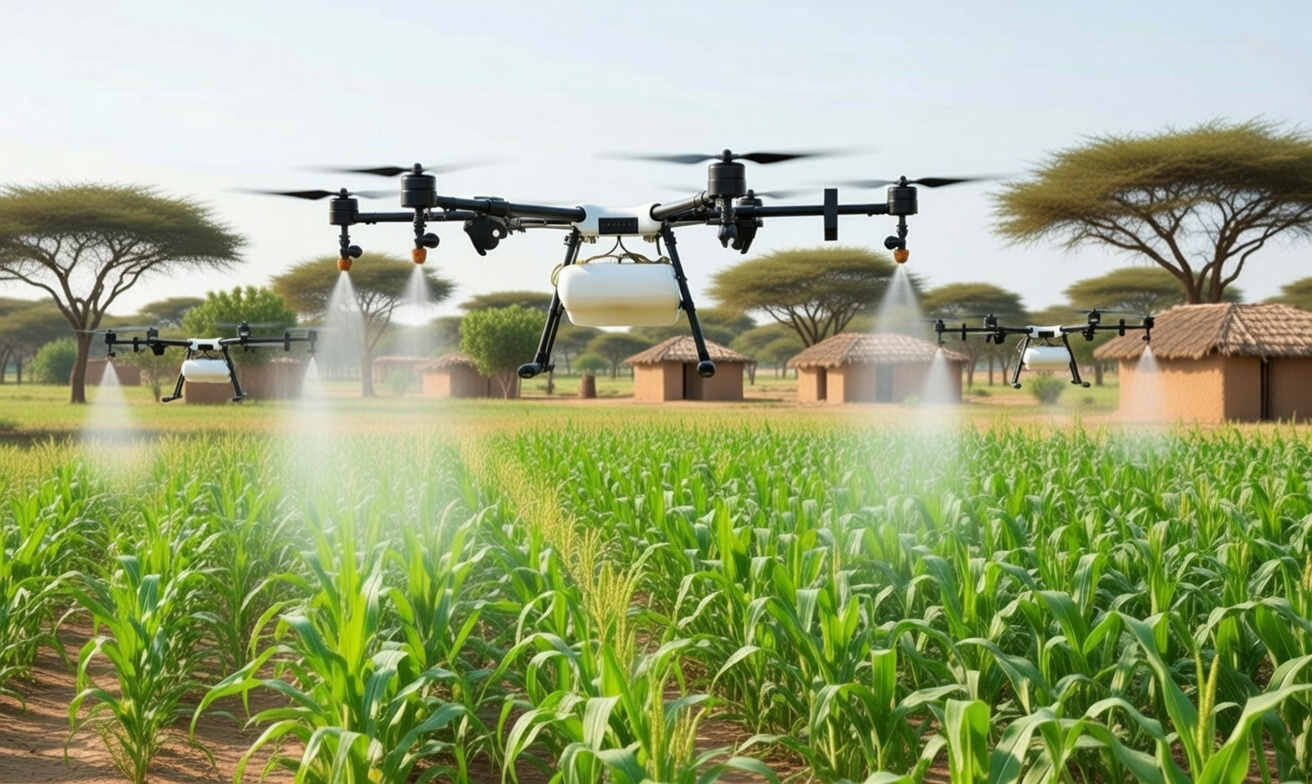
However, climate-sensitive agriculture practices and new technologies envisioned within the broad Digital Agricultural revolution may offer new strategies to cope and adapt to the rapidly changing climatic conditions. Digital Agricultural technologies, such as the Global Positioning System (GPS), soil & moisture sensors, data modelling applications via smartphones and mobile technologies, automated technologies such as robots, drones and smart tractors could help smallholder farmers to maximize agriculture resource use efficiency. These tools may assist the farmers to be more precise with applying farm input (e.g. seeds, fertilizer, water, pesticides). Ultimately, these technologies will help farmers adapt to both climate and non-climatic stressors to increase food production output. They could also drastically contribute to reducing agriculture’s contribution to global GHGs emissions.
There are many potential mechanisms that digital technologies could facilitate climate change resilience. These can be categorized into two folds; first, digital technologies provide new and faster access to inputs and services (seeds, fertilizer, mechanization, capitals, markets etc.) that make farming more environmentally and financially efficient. The second is that digital technologies help to increase farmers’ adaptive capacity to climate shocks and enhance their resilience to both climate and non-climatic stress in the longer term. For instance, advisory and information services via the mobile phone device could offer farmers vital place-specific agronomic and livestock management tips. This practice has a huge potential in enhancing smallholders’ adaptive capacity to climate change due to the proliferation of smartphones and their rapid penetration in developing countries. Furthermore, virtual market platforms and access solutions could minimize the distance and resources used to travel and connect to markets. Just like booking for Uber transport service, farmers can easily book tractor services using their phones in the comfort of their homes without having to travel to vendors to access this service.
A 2023 study funded by the Canadian Government through the International Development Research Center (IDRC) International Doctoral Research Award (IDRA) in Ghana and Rwanda, elucidate the potential of digital agriculture technologies to enhance climate resilience and productivity of smallholding agriculture. While the use of digital agriculture among farmers is not impressive per the study, we found that digital technologies could also provide other benefits such as, through the virtual market platforms, farmers can connect to village savings and loan institutions, suppliers and buyers to trade in ways that reduce the carbon footprint associated with having to engage manually. Moreover, at the comfort of farmers’ homes, reservations for warehousing for their farm produce can be made before and during harvest. This can help reduce methane (a potent GHGs) gas emission resulting from food loss and waste associated with post-harvest losses. Finally, through Big Data analytics, cutting-edge gene-editing technologies will allow plant and animal breeders to determine which cells or tissues are responsible for specific traits in crops or animals and also enhance those traits to be present or absent in future generations of these species through gene-editing means. This technology will allow breeders to produce and make available for smallholder farmers crops and livestock variety that are climate resilient and have high yields and growth potential for increased agricultural productivity.
In conclusion, it is essential to mention that digital technologies’ potential contribution to reducing climate impacts on smallholder farmers in Africa may require many measures. For instance, the deployment of these technologies must be socially inclusive for all farmers, irrespective of their gender, age group, geographical location, social or economic status. Again, these technologies must respect the agency of smallholder farmers to choose which technology and services they are interested in willingly and freely and which one they are not. Additionally, there is the need for cooperation and conscious effort across various stakeholder groups, including farmers, donors, private sector institutions and governments, to support sustainable agro-ecological approaches.